Hyprop is adapting its shopping centres, not only to satisfy changing consumer habits and expectations but also to ensure that its properties are resilient into the future. This reflects both the group’s own ethical and commercial commitment to reducing greenhouse gases, as well as the prevailing consensus of its stakeholders.
Over the past four years, Hyprop has been investing in auditing and addressing various aspects relating to its own and its tenants’ consumption of natural resources. More such projects are in the pipeline for 2022/23. “Buildings typically have long lifespans, and much of the stock existing today will still be in use in 2050. Retrofitting existing stock is essential if we are to transition to a low-emission future,” says Steven Riley, Hyprop’s Head of Developments and Sustainability.
"Smart building are key for a smart city's collaborative ecosystem "
Hyprop is working on updating Tenant Criteria Documents which focus on energy, water, and waste, and devising, with its tenants, “house rules” to ensure that everyone reduces their carbon and water footprint in line with Hyprop’s strategy.
Hyprop itself is guided by global targets to reduce emissions and is doing so across a range of projects, from building management to its use of electricity and solar power, to water and waste.
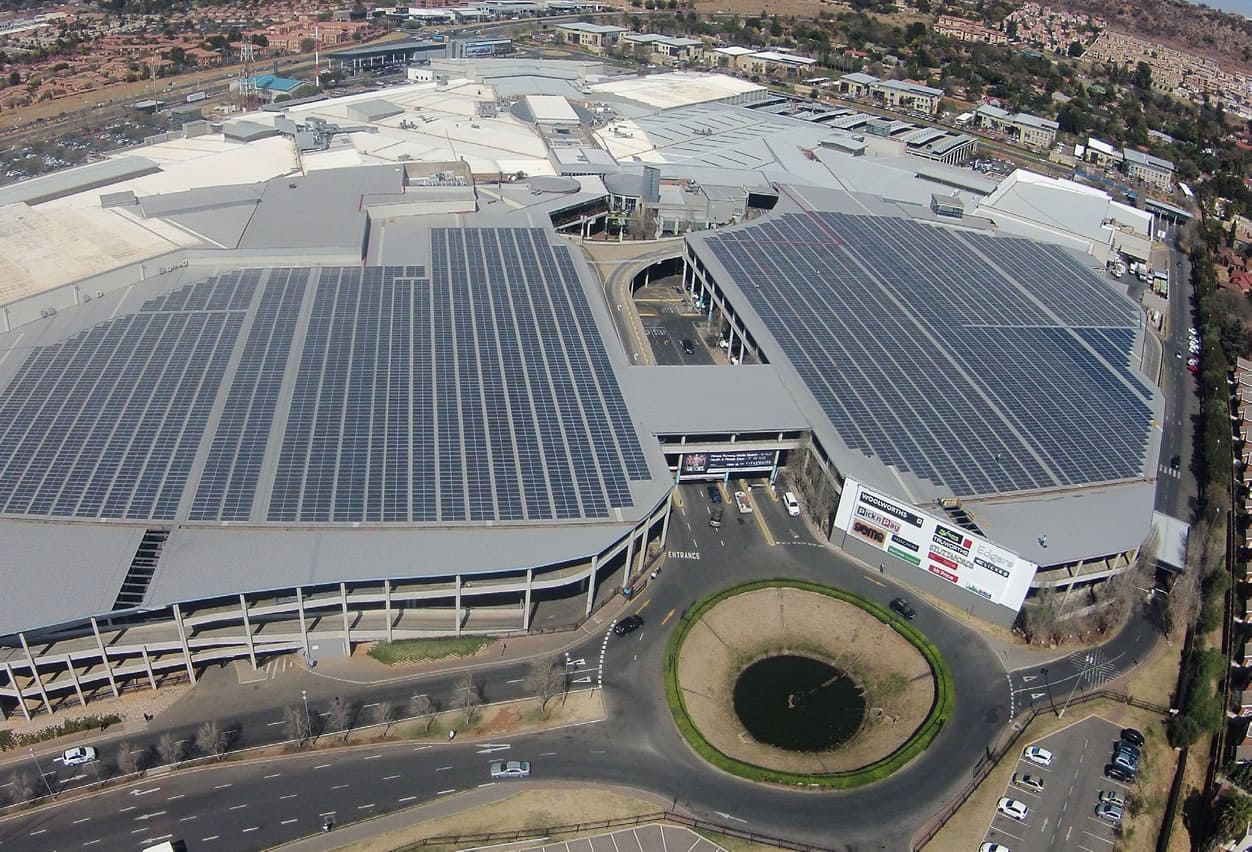
The solar PV panels that were installed in 2020 at six of the centres performed above expectations and, together with the existing system at Clearwater Mall, produced a total of 10 684 000 kilowatt hours (kWh) for the 2022 financial year. This results in a saving of 6 000 tonnes of coal burned, over 15 million litres of water, and the avoidance of more than 11 000 tonnes of carbon dioxide emissions into the atmosphere.
In the year ahead, Hyprop will implement the next phase of solar PV at Woodlands Boulevard, Rosebank Mall, and Clearwater Mall. The total system size is 7 254 kilowatts peak (kWp) and it will produce 8 919 482 kWh per annum, equating to a saving of almost R21 million per annum.